Skip to content
Thermal Drone SurveyExeter · Devon and the South West
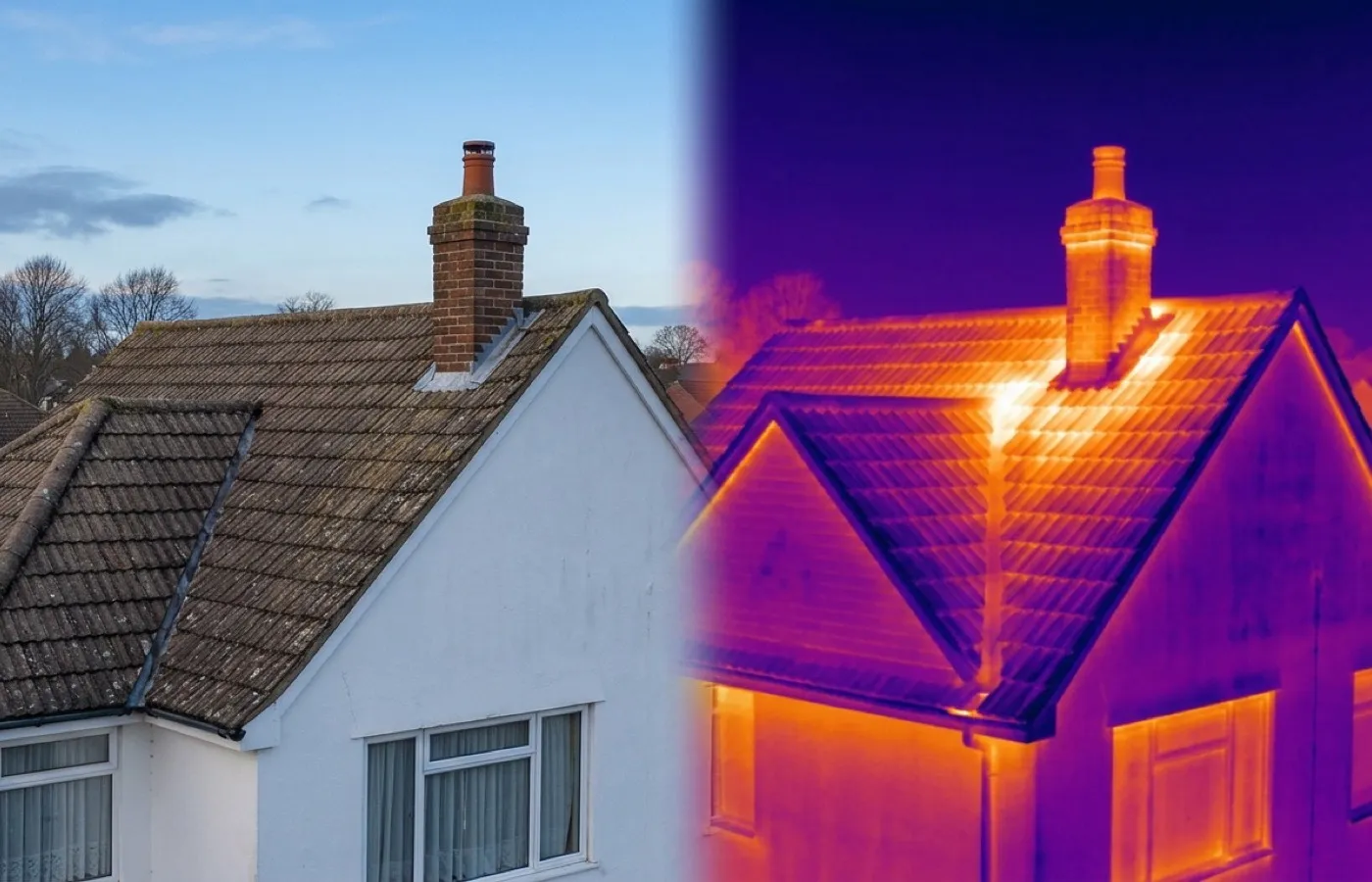
Split view of a British house roof and wall, one half a normal photograph and the other half the same view in false-colour thermal imaging showing a warm patch near the ridge

Devon and the South West

A camera that reads temperature, not a camera that reads minds

A radiometric thermal survey shows where a building is losing heat or holding water on the day it was flown, in that day's conditions, read by someone who tells you plainly what it does and does not prove.

  • Radiometric thermal camera alongside a 100 megapixel visual one
  • Flown at the time of day the reading actually needs, not office hours
  • Fixed price agreed before the visit
  • Written report within 48 hours, including what could not be read

The actual problem

Everyone can see a heating bill. Almost nobody can see where the heat is going

A cold room, a bill that has crept up over a couple of winters, a damp patch that keeps coming back in the same corner. All of it has a physical cause somewhere in the fabric of the building, and almost none of it is visible from inside the room where it is being felt.

The usual answer is a guess dressed up as an opinion: an installer who tells you the loft needs topping up without checking whether it already has been, or a builder who points at the obvious extension wall because it is the wall they can see, not because they have any evidence it is the culprit.

A thermal camera does not solve the guessing on its own, and this site is built around saying so plainly. What it does is turn a felt symptom into a photographed temperature pattern, which is a very different starting point for deciding what to fix.

What we fly

One camera, three different questions

The flying is much the same each time. What changes is whether the question is about the whole building, one room, or a flat roof that might be holding water.
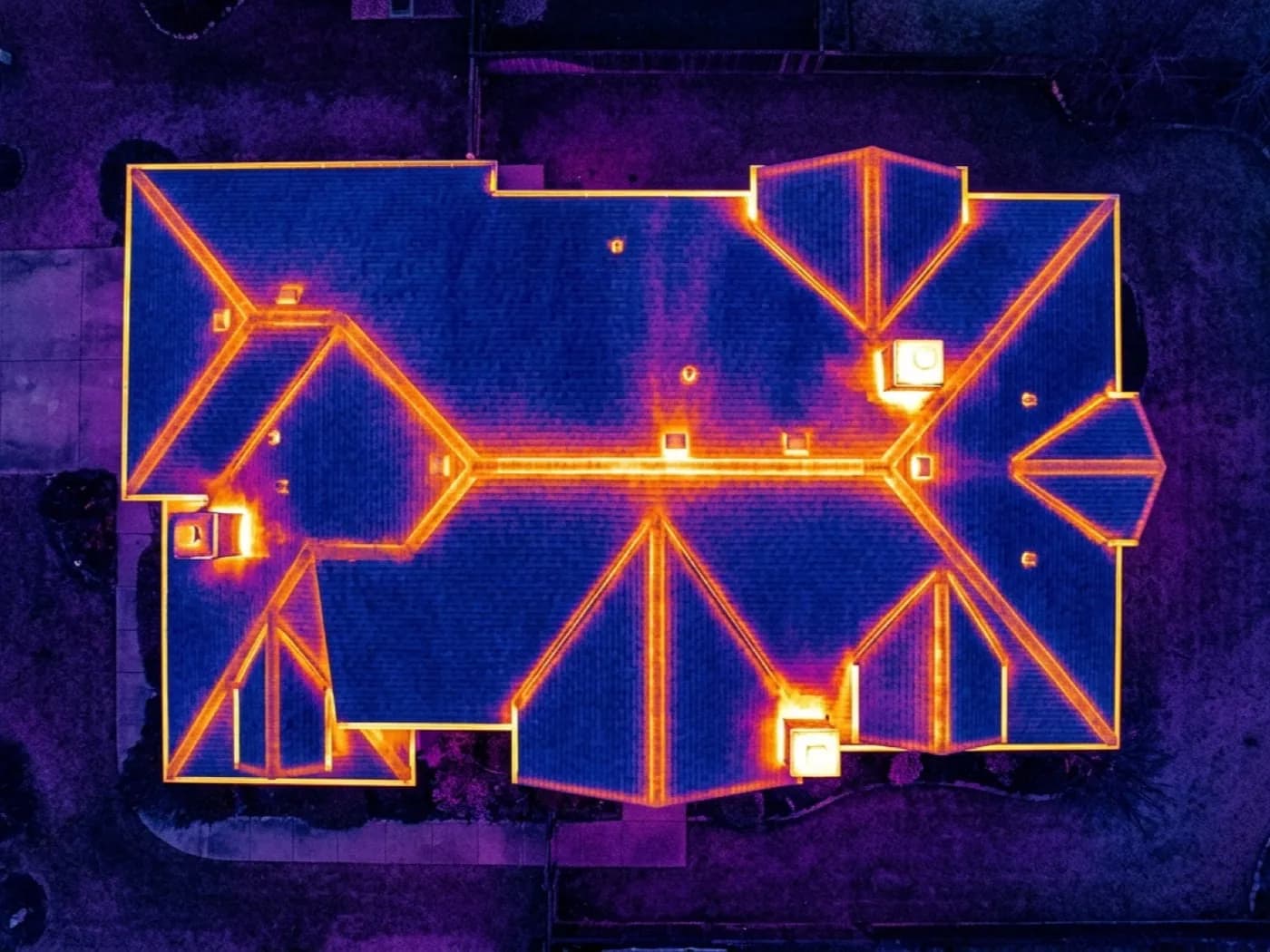
Aerial thermal camera image of a whole house roof in ironbow false colour, showing warmer areas near the ridge against a cooler roof field

Thermal Roof and Building Survey

A radiometric thermal pass over the whole roof and elevations alongside a 100 megapixel visual survey, written up with what the temperature pattern actually shows within 48 hours.

The whole-building scan
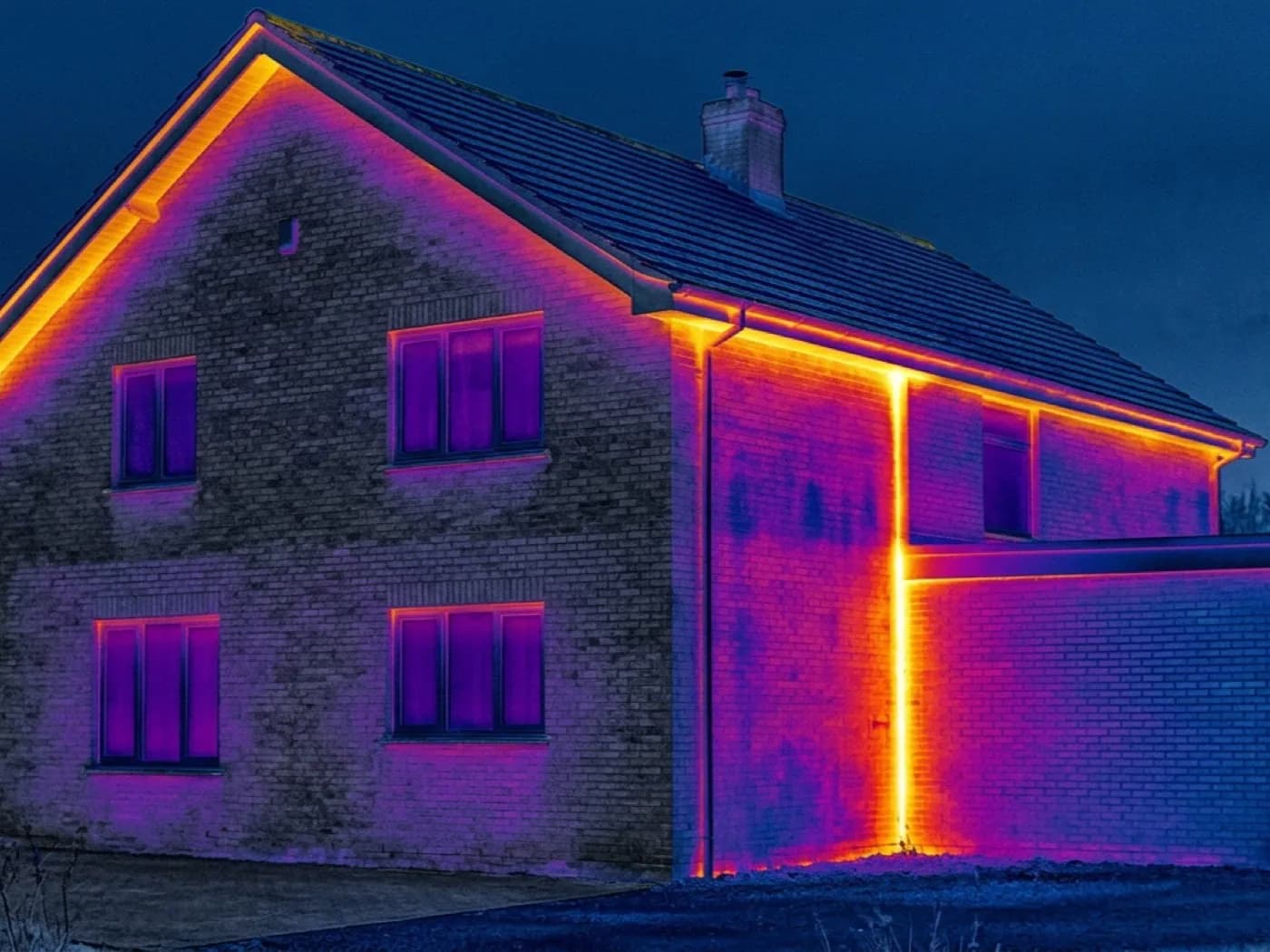
Thermal camera image of a house gable end at dusk showing a warm vertical strip at a wall junction against a cooler surrounding wall

Heat Loss and Insulation Gap Survey

A targeted thermal check on a cold room, a suspected patch of missing loft insulation, or a cold bridge at a wall junction, aimed at homeowners with a symptom rather than a vague worry.

Heat loss and insulation gaps
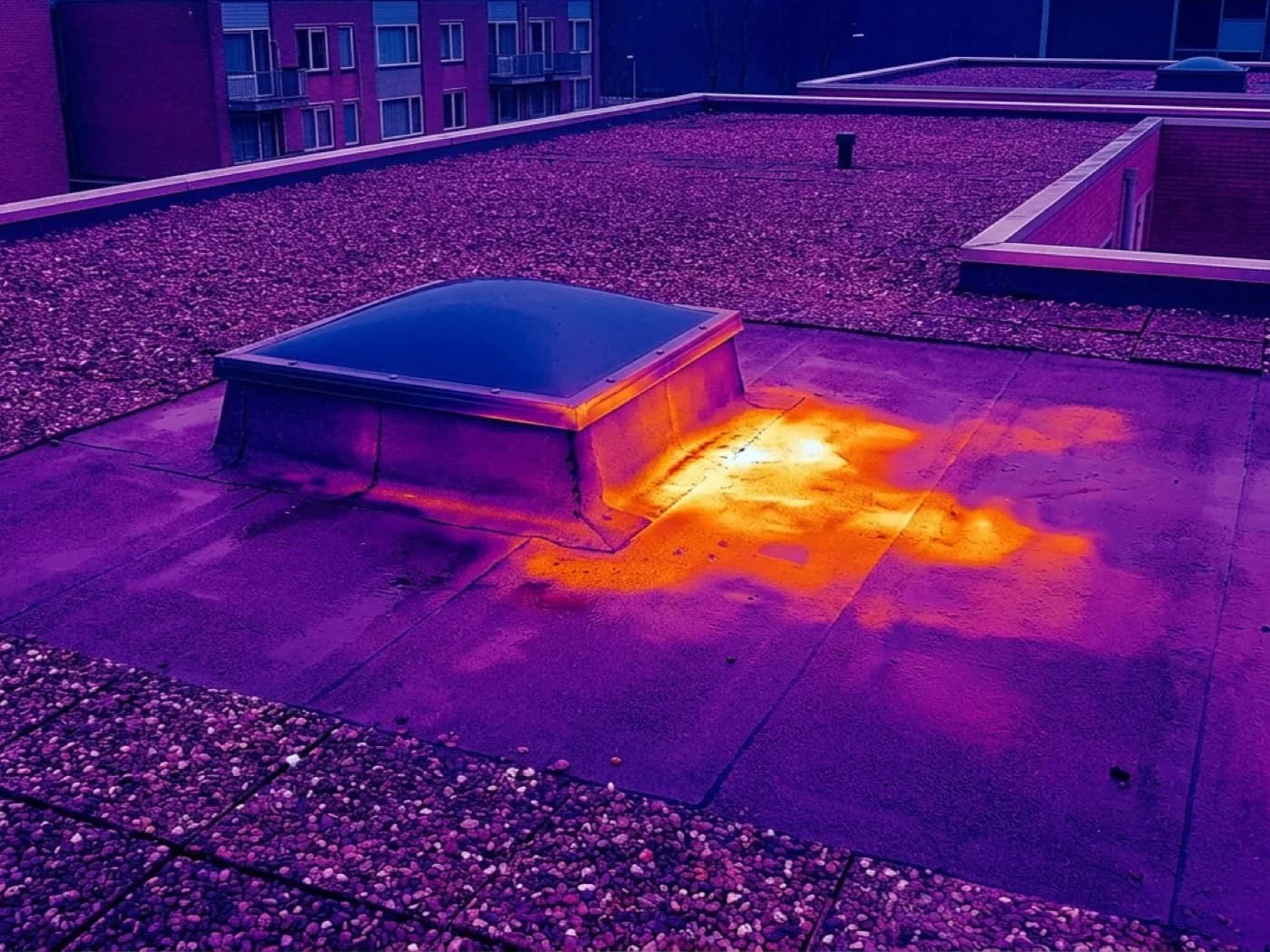
Overhead thermal camera image of a flat roof showing an irregular warm zone near a rooflight, suggesting trapped moisture beneath the membrane

Damp and Flat Roof Moisture Survey

A thermal check for trapped moisture beneath a flat roof membrane, aimed at landlords, managing agents and homeowners with an extension roof that never quite seems right.

Damp and flat roof moisture

Credentials

What sits behind the survey

CAA registered

Operator ID and Flyer ID held, plus the A2 Certificate of Competency. Every flight, including the early morning and after-dark ones this survey often needs, is planned to the rules that apply to the site.

Radiometric thermal camera

A DJI Mavic 2 Enterprise Advanced carrying a 640 by 512 radiometric sensor. Radiometric means every pixel is an actual temperature reading, not just a colour, which is what makes a genuine comparison across a roof or a wall possible.

100 megapixel visual pass

A DJI Mavic 4 Pro with a Hasselblad camera flies alongside the thermal camera on every job, so a warm or cool patch on the thermal image can be matched back to the actual roof feature or wall detail underneath it.

Insured with Coverdrone

Full commercial cover for the operation. Certificates go to managing agents, landlords and insurers as a matter of course, without anyone having to chase for them.

What you get
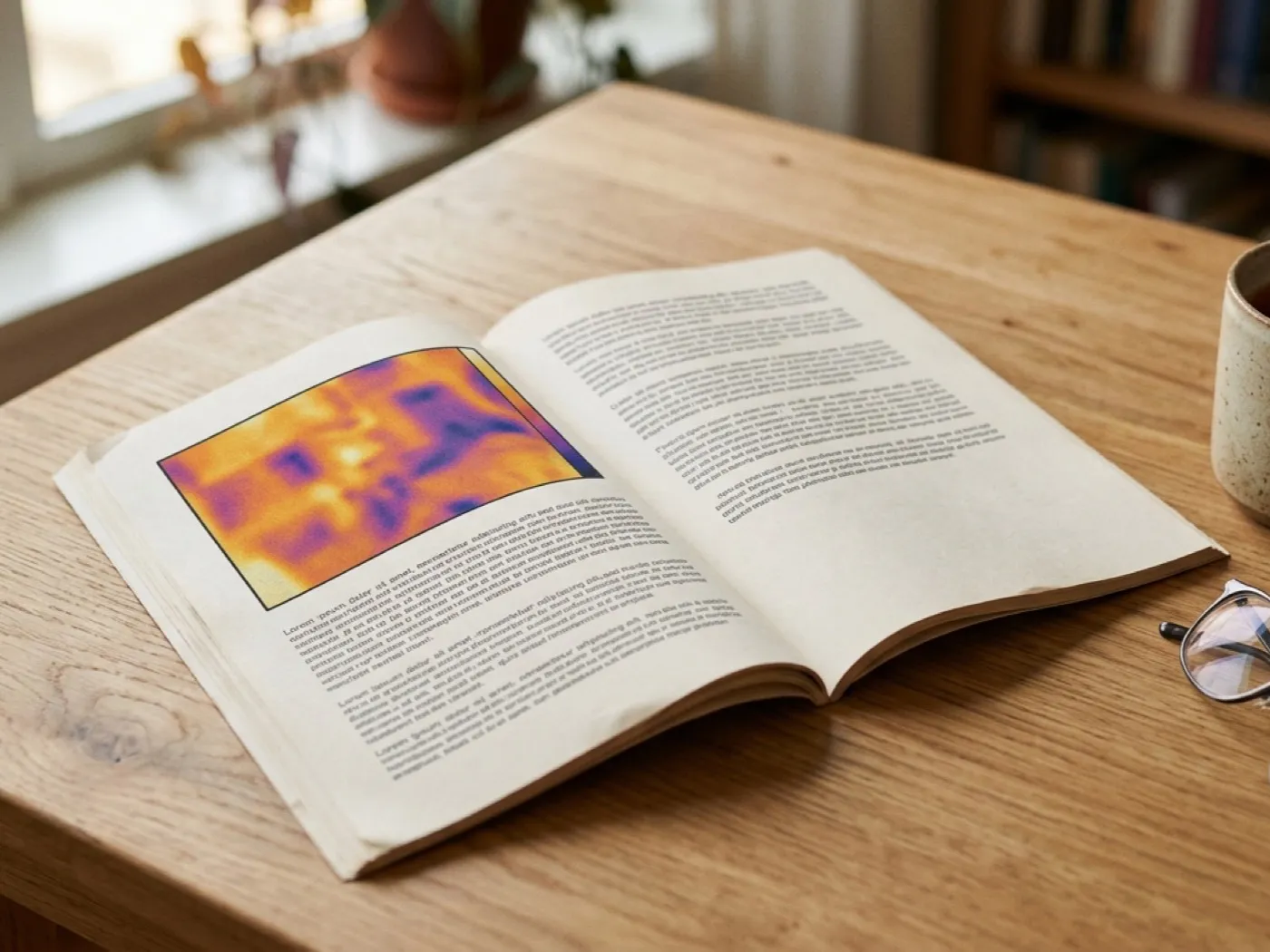
A report that says what the camera showed, and what it did not prove

The flight is the easy part. The value is in what lands in your inbox 48 hours later, and in what it is plain enough to leave out.
  • Visual and thermal images paired up, so a reading can be checked against what is actually there
  • Every significant temperature anomaly located and matched to a building feature
  • A plain description of what each finding most likely means
  • A confidence note on each finding, not a flat statement dressed up as certainty
  • A clear list of anything the conditions on the day meant could not be read reliably
  • The full resolution originals, so an installer or contractor can look at the evidence directly
A printed thermal survey report open on an oak desk beside reading glasses and a mug of tea

What it actually looks like

A temperature pattern, not a magic picture

Each of these is a genuine kind of finding this camera can show. None of them prove a cause on their own, which is exactly why the report reads them alongside the visual images rather than on their own.
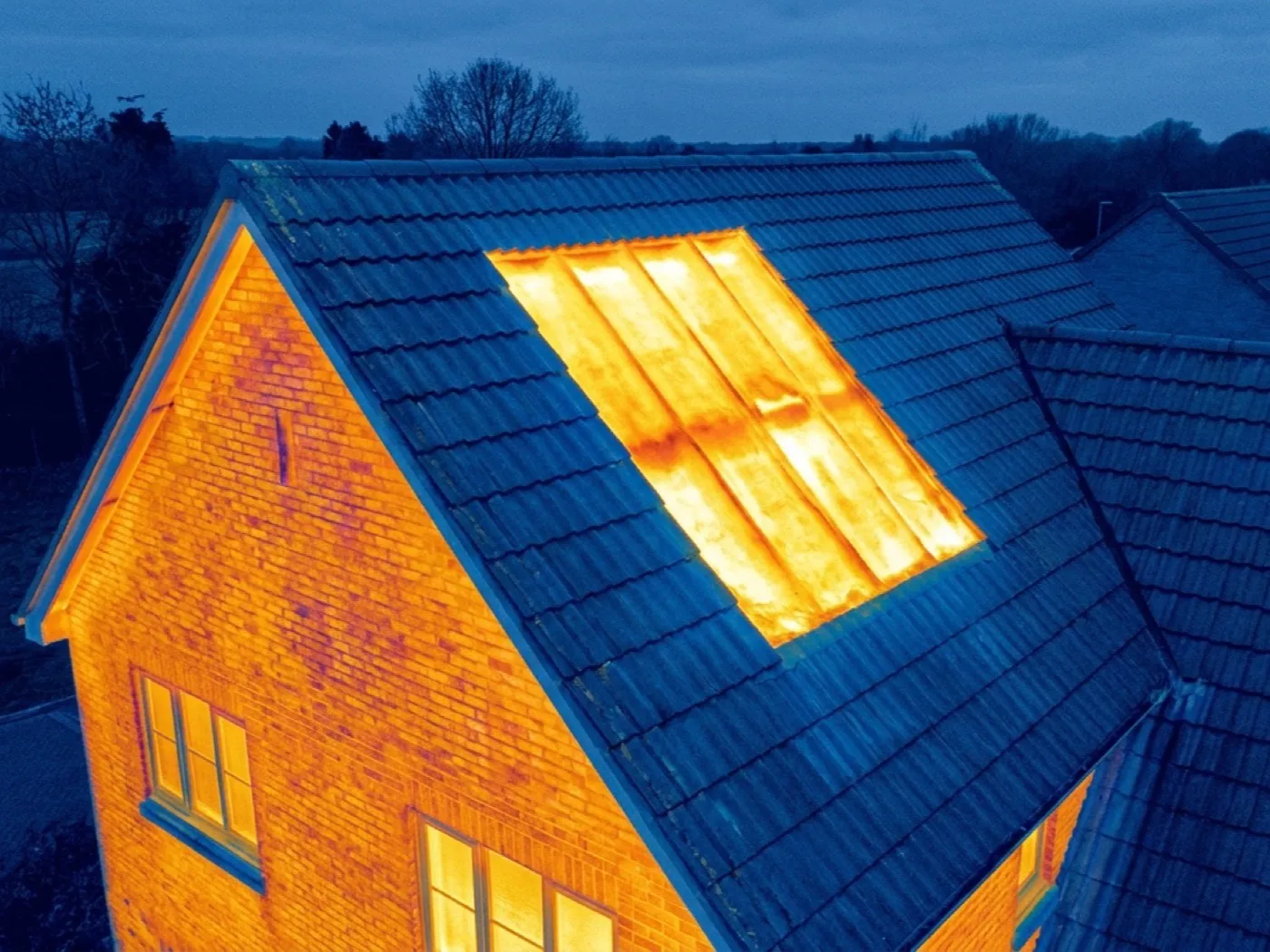
Thermal image of a roof slope showing a sharply defined warm rectangle where loft insulation is missing, against a cooler field where it is intact
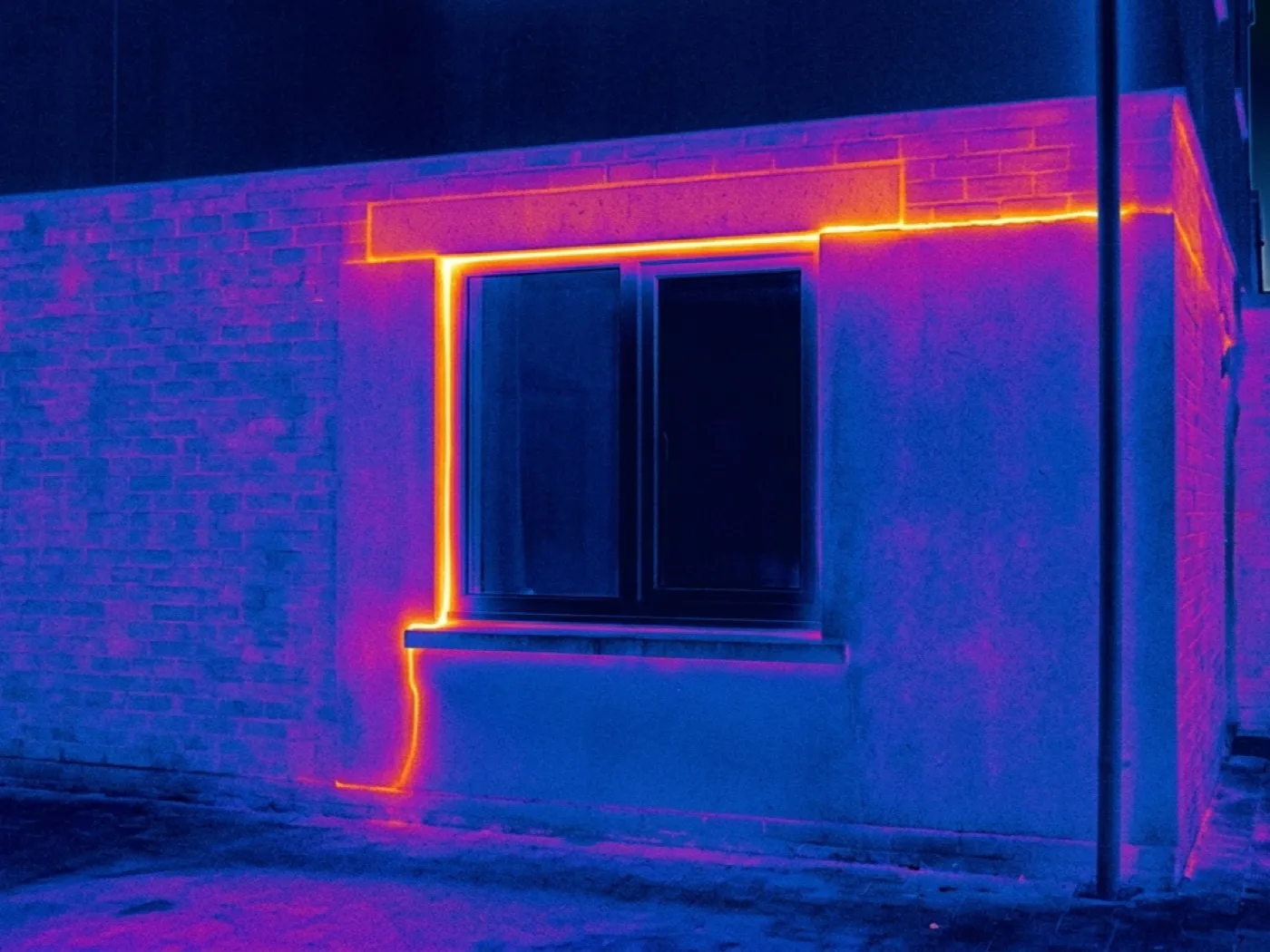
Thermal image of a window reveal and lintel showing a thin warm line where heat is bridging through the structure
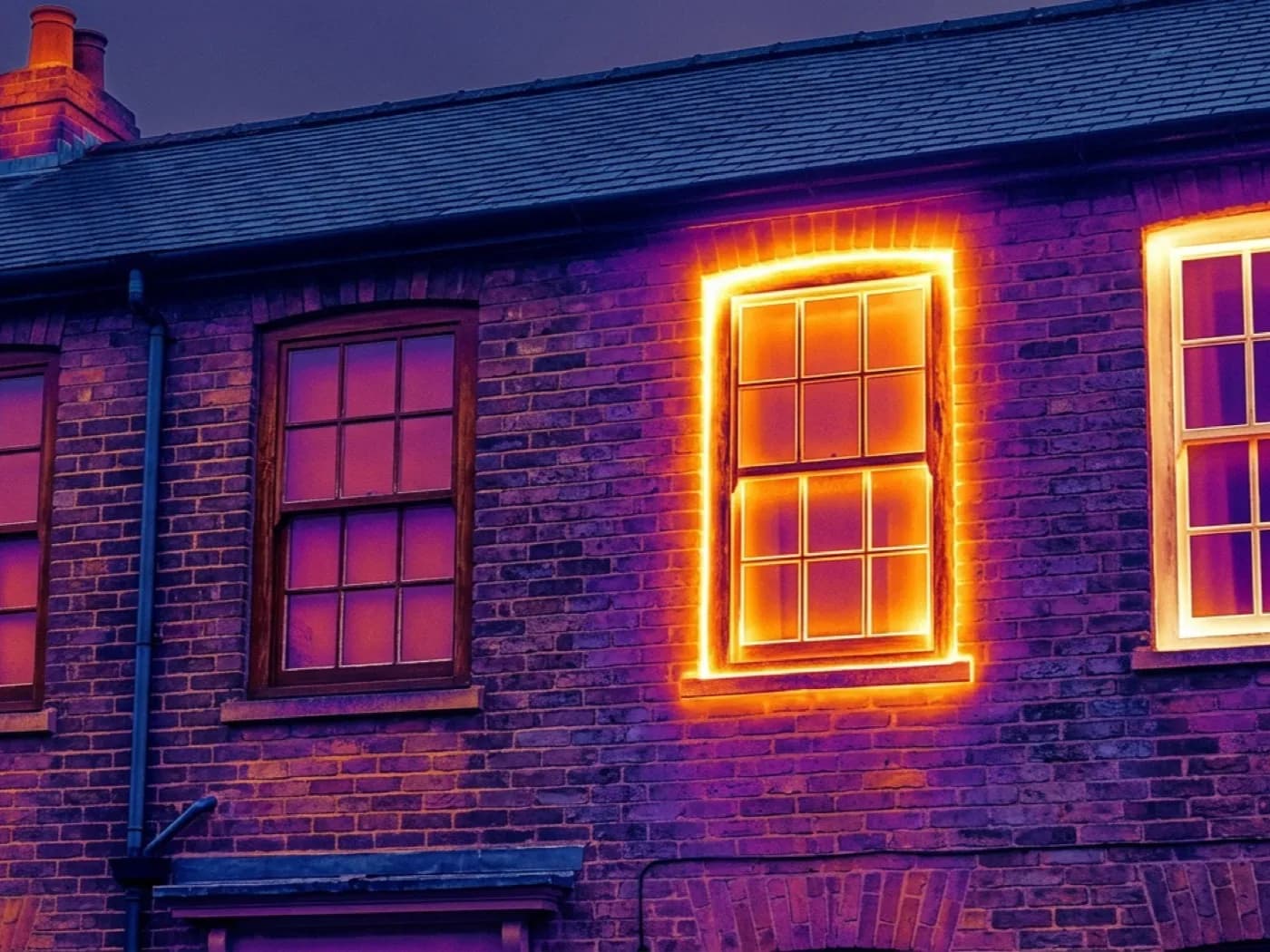
Thermal image of upstairs windows at dusk, one frame showing a bright warm halo around its edge against the cooler wall beside it
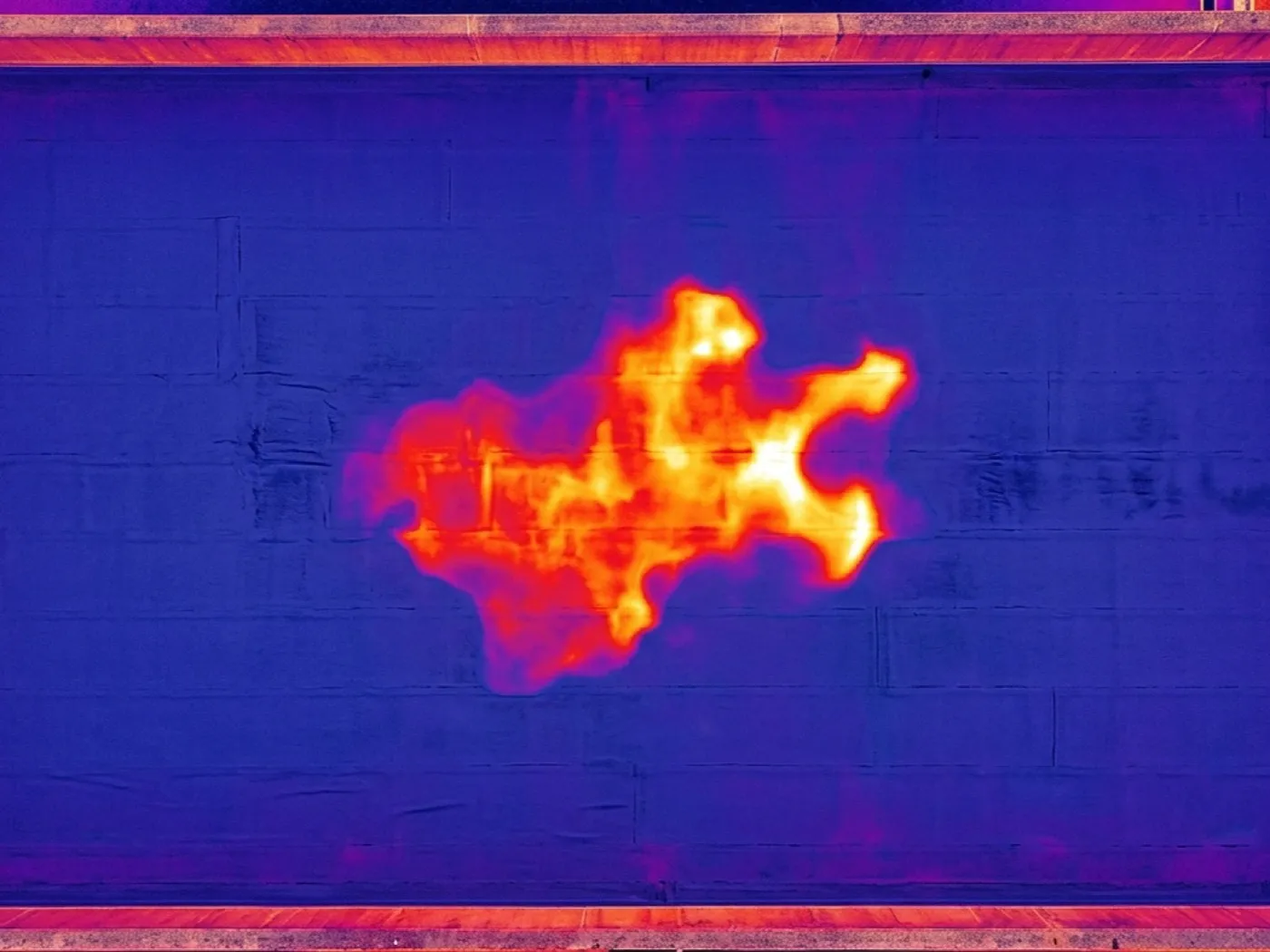
Overhead thermal image of a flat roof membrane showing an irregular warm patch consistent with trapped moisture beneath the surface

Where we fly

Devon first, then as far as the South West goes

Every town below has its own page, written around the age and construction of the housing actually built there, because a thermal reading means something different on a solid Victorian wall than it does on a 1930s cavity or a modern flat roof extension.

Questions

Questions we get asked

What does a thermal camera actually see?
Surface temperature, nothing more. It shows where an outside surface is warmer or cooler than its surroundings on the day it was flown. It does not see through a roof or a wall, and it does not detect water or lost heat directly, it detects the temperature difference that a defect often, but not always, leaves at the surface.
Why does the time of day matter so much for this survey?
The camera needs a real temperature difference to show anything. A house that has warmed evenly in the afternoon sun gives the camera almost nothing to read. Dawn after a cold, clear night with the heating running overnight, or a clear evening after a sunny day for a flat roof, are usually when a reading is worth having.
Does the survey work on a wet roof, or straight after rain?
Not reliably. Wet surfaces cool by evaporation in a way that can hide a genuine defect or create a false one, so a flight is timed to avoid it where possible. If recent rain has limited what could be read on the day, the report says so rather than presenting an unreliable image as a clean result.
Can bright sun ruin a thermal reading?
Yes. A surface heated directly by the sun, or reflecting it, can read warm for reasons that have nothing to do with the building underneath, which is one of the more common ways a thermal image gets misread by someone without the background to separate the two. It is why the flight is planned around light and sun angle as carefully as it is planned around temperature.
What about a reflective roof or shiny cladding?
Reflective and highly polished surfaces, some metal roofing and certain modern cladding among them, can reflect the temperature of the sky or a nearby object rather than showing their own surface temperature, which produces a false reading. Where a roof or elevation includes material like this, it is flagged in the report as unreliable for a thermal read rather than presented as a clean result.
Do I need to be there for a thermal flight?
No. A lawful launch point and permission to be at the property is enough. What does help is knowing the heating pattern in the building beforehand, so a quick message the day before about whether the heating has been running as normal is often part of arranging the flight.
What do I get at the end?
A written report within 48 hours, pairing the visual and thermal images, a plain description of each finding and what it most likely means, a confidence note on each one, and a clear list of anything the conditions on the day meant could not be read reliably.
How much does a thermal survey cost?
A fixed price per survey, agreed before the visit, based on the address, the size of the building and which of the three surveys fits the job. Send the address and what you want looked at and the figure comes back rather than a range.

See what it can and cannot see

Book a thermal survey with Thermal Drone Survey

Tell us the address and what you need looking at. Sam Hembury will come back with a fixed price and the next available slot.

Call 07576 544932Book a thermal survey